
Makar Sankranti is celebrated every year on January 14 (sometimes January 15 in leap years). It marks the Sun’s transition into Capricorn (Makar Rashi), symbolizing the end of winter and the beginning of longer, warmer days.
Makar s Sankranti festival of food and celebration in its own unique way, with different names, rituals, and cultural traditions.
Introduction
Makar Sankranti festival of food and celebration across India in different ways. Discover how various Indian states celebrate Makar Sankranti with unique traditions, rituals, and festive foods.
Makar Sankranti is not just about harvest—it’s about community bonding, gratitude, and renewal. sharing the common theme of celebrating nature’s cycles.
The kite festivals in Gujarat and Maharashtra, bonfires in Punjab, and feasts in Tamil Nadu all reflect India’s regional diversity while sharing the common theme of celebrating nature’s cycles.
1.Gujrat-Uttarayan
Gujarat- Makar Sankranti is considered the heart of kite flying celebrations in India. The festival is locally known as Uttarayan, celebrated on 14th January every year.
International Kite Festival
Gujarat hosts the famous International Kite Festival, especially in cities like Ahmedabad, Surat, Vadodara, and Rajkot. Kite flyers from different countries come to participate, making it a global event.
Rooftop celebration:
Families gather in the rooftop early in the morning with:
- Colourful paper kites
- Special kite strings (manja)
- Traditional snacks like undhiyu, jalebi, chikki, and til ladoo
People shout popular phrases like “Kai Po Che!” when they cut another kite, adding excitement and friendly competition.
Cultural Importance-
Kite flying during Uttarayan symbolizes:
- The end of winter
- The beginning of longer, brighter days
- Joy, freedom, and positivity
Music, dance, and community bonding make the celebration
In Gujarat, Makar Sankranti is known as Uttarayan. It is one of the biggest festivals in the state.
2. Maharashtra-Tilgul Tilgul and Sweet Greetings
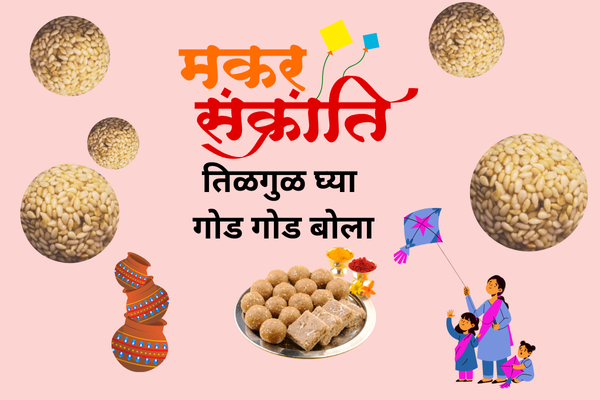
In Maharashtra, Makar Sankranti is celebrated with simplicity and warmth.
How it is celebrated:
Charity and donation of food and clothes are common
People exchange tilgul ((sesame and jaggery sweets). are shared.
Greetings like ”Tilgul ghya, goad goad bola” “Amchi til sandu aka ,Amchyashi bhandu naka.” meaning Take sesame and jaggery ,speak sweetly. Don’t let our sesame -jaggery sweets (Tilgul)go to waste /drop)
Women organize haldi-kumkum gatherings
During Makar Sankranti festival of food and celebration ( sesame-jaggery sweets) symbolize warmth and sweetness in relationships.
“तीळगूळ घ्या गोड गोड बोला,आमची तीळ सांडू नका आमच्याशी भांडू नका“
3.Tamil Nadu-Pongal
In Tamil Nadu, Makar Sankranti is celebrated as Pongal, a four-day harvest festival.
How it is celebrated:
- Cooking of sweet and savory pongal dishes
- Worship of the Sun God
- Decorating homes with kolam (rangoli)
- Honoring farmers and cattle
Each day of Pongal has special significance, including Bhogi, Thai Pongal, Mattu Pongal, and Kaanum Pongal.
4.Punjab-Lohri celebration
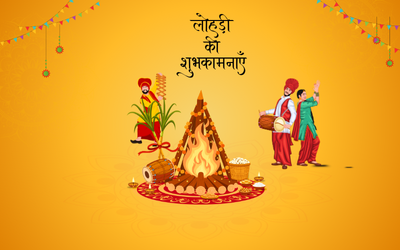
In Punjab, Makar Sankranti is closely connected with Lohri, celebrated a day before.
How it is celebrated:
- Bonfires are lit in the evening
- People sing folk songs and perform bhangra and giddha
- Traditional foods like rewri, gajak, peanuts, and popcorn are enjoyed
- It celebrates agricultural prosperity
5.Assam-Magh Bihu
In Assam, Makar Sankranti is celebrated as Magh Bihu or Bhogali Bihu.
How it is celebrated:
During Makar Sankranti festival of food and celebration-
- Community feasts are organized
- Traditional dishes made of rice are prepared
- Temporary huts called meji are built and later burned
- It marks the end of the harvest season
6.Uttar Pradesh and Bihar-Khichdi Festival
In Uttar Pradesh and Bihar, the festival is known as the Khichdi Parv.
How it is celebrated:
- Preparing and donating khichdi made of rice and lentils
- Holy baths in rivers like the Ganga
- Visiting temples and offering prayers
- Charity and food distribution are important rituals
5.West Bengal-Poush Sankranti
In West Bengal, Makar Sankranti is celebrated as Poush Sankranti.
How it is celebrated:
- Preparing traditional sweets like pithe and payesh
- Taking holy baths in rivers
- Celebrating with family gatherings
- Worshipping the Sun God
7.Karnataka-Suggi Festival
In Karnataka, Makar Sankranti is known as Suggi or Makara Sankramana.
How it is celebrated:
- Decorating cows and bulls
- Preparing dishes made of sesame and jaggery
- Exchanging gifts and sweets
- Farmers celebrate the harvest
8.Andhra Pradesh And Telangana
In Andhra Pradesh and Telangana, Makar Sankranti is called Pedda Panduga.
How it is celebrated:
- Cleaning and decorating homes
- Preparing traditional foods
- Worshipping cattle and crops
- Celebrating over four days with family
8.Kerala-Makara Vilakku
In Kerala, Makar Sankranti is linked with Makara Vilakku at the Sabarimala temple.
How it is celebrated:
- Devotees gather for pilgrimage
- Special prayers and rituals are performed
- The festival has deep spiritual importance
Symbolic Meaning of Kite Flying
Kite flying holds deep symbolic meaning across India:
- Represents freedom and happiness
- Encourages community bonding
- Celebrates seasonal transition
- Teaches patience, focus, and sportsmanship
It also reminds people to look up, dream big, and stay connected with traditions.
Modern and Eco-friendly Celebrations
Today, people are becoming more aware of:
- Using eco-friendly kites and cotton threads
- Avoiding harmful glass-coated strings
- Flying kites responsibly to protect birds and people
Many cities promote safe and environmentally friendly kite flying practices.
Spiritual Importance: Considered highly auspicious for bathing in holy rivers like the Ganga, Yamuna, and Godavari.
Conclusion
Makar Sankranti festival of food and celebration beautifully showcases India’s unity in diversity. Though celebrated with different names and traditions across states, the festival shares a common message of gratitude, prosperity, and positivity. It brings people together to celebrate nature, harvest, and new beginnings.
Kite flying during Makar Sankranti is a beautiful tradition that connects people across India. From the grand Uttarayan celebrations in Gujarat to joyful kite flying in Maharashtra, Rajasthan, Uttar Pradesh, and beyond, this tradition spreads happiness and unity.
More than just a game, kite flying represents hope, joy, and cultural pride. It continues to bring generations together, keeping India’s festive spirit alive in the skies.–
मकर संक्रांति की हार्दिक शुभकामनाएं
FAQs – Makar Sankranti in India
Q1. Why is Makar Sankranti celebrated in India?
Makar Sankranti marks the Sun’s movement into Capricorn and the beginning of Uttarayan, symbolizing prosperity and harvest.
Q2. Is Makar Sankranti celebrated on the same date every year?
Yes, it is usually celebrated on 14th January every year.
Q3. What is Makar Sankranti called in Tamil Nadu?
In Tamil Nadu, it is celebrated as Pongal.
Q4. What food is common during Makar Sankranti?
Sesame seeds, jaggery, rice, lentils, sweets, and khichdi are commonly eaten.
Q5. Which states celebrate Makar Sankranti as a harvest festival?
Tamil Nadu, Punjab, Assam, Karnataka, Andhra Pradesh, and Maharashtra celebrate it as a harvest festival.